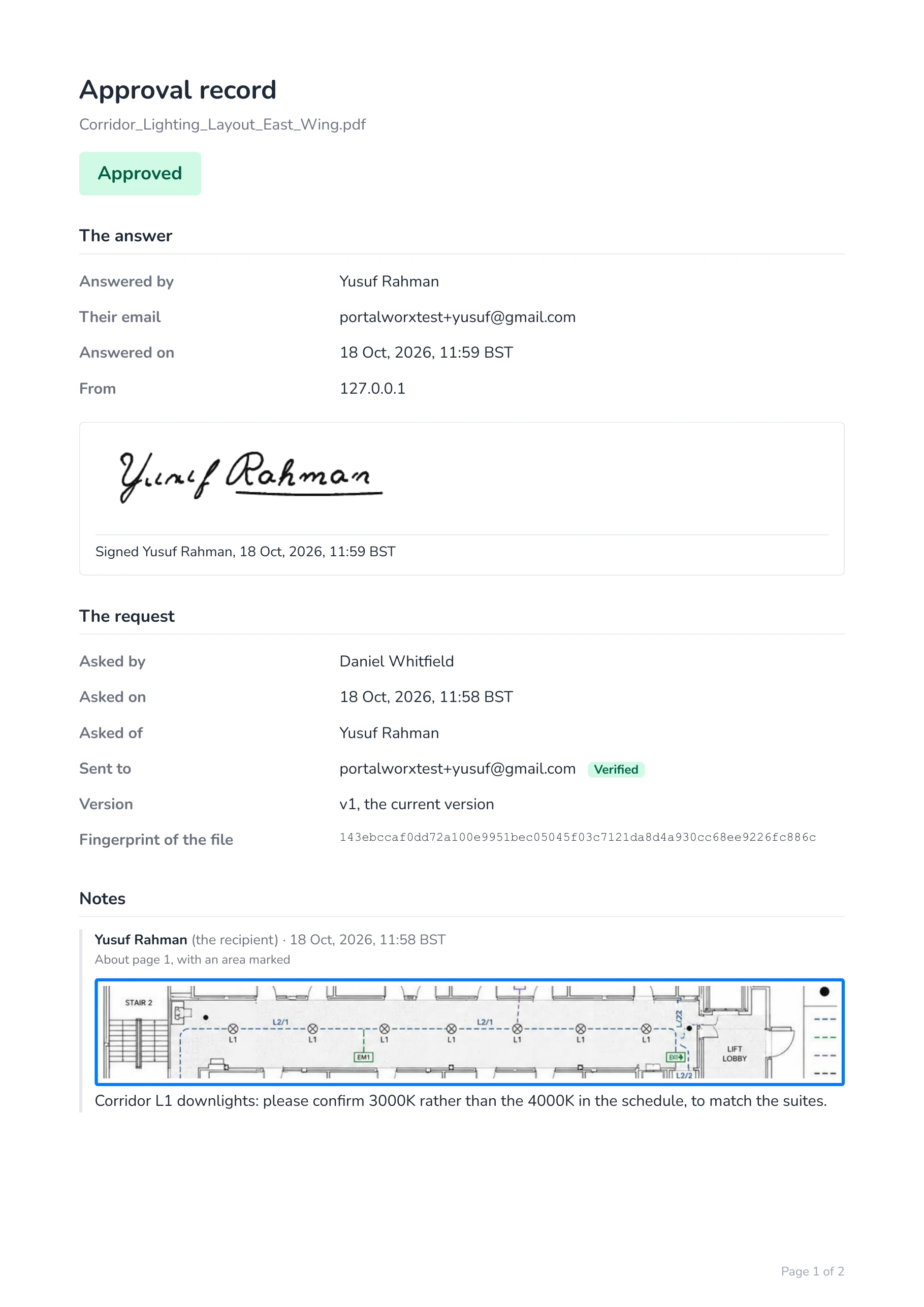
A real record from a real approval, made on the demo project: the client opened a link, marked a spot on the drawing, approved and signed. Nothing here is a mock-up and nothing is redacted, because every name is a test person. Read it the way your client's solicitor would.
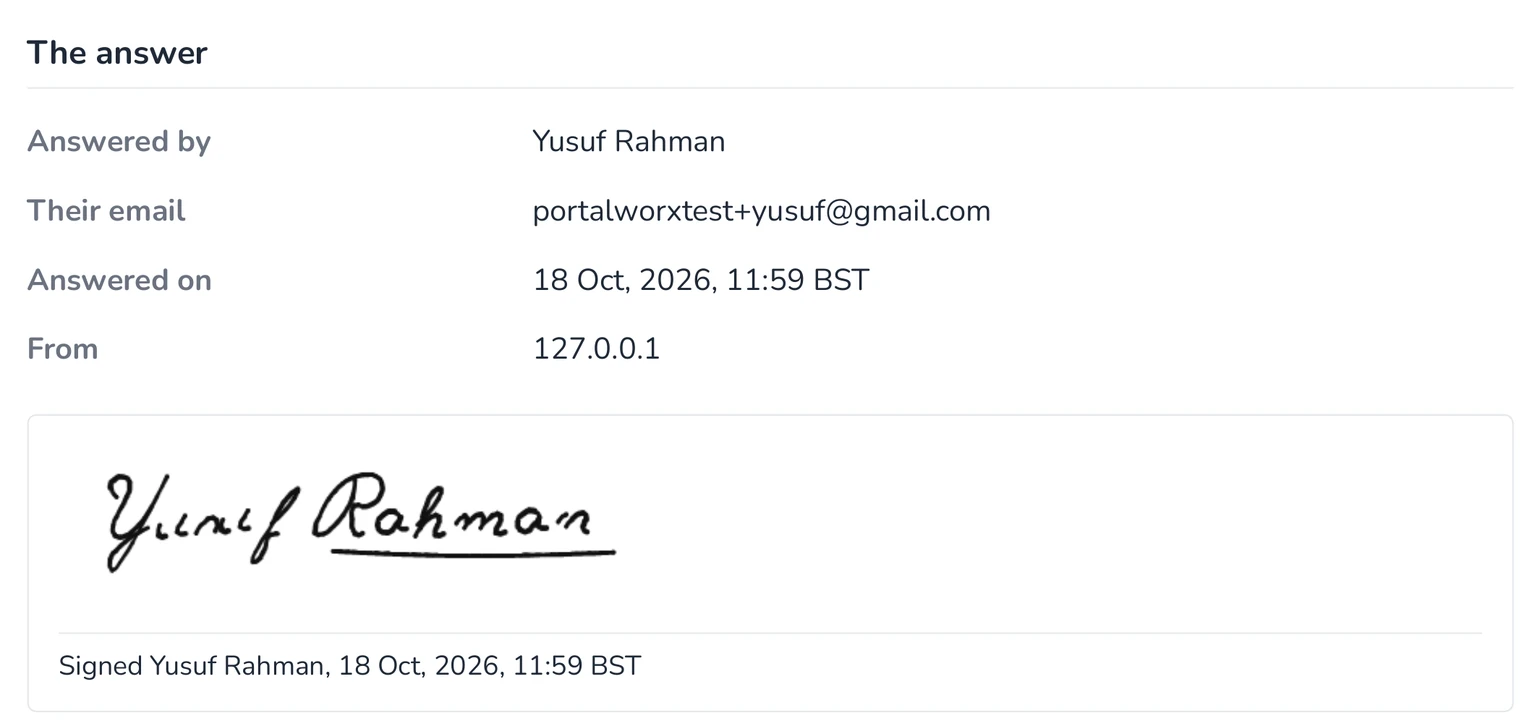
The name they typed and the email address the link was sent to. The name is claimed, not verified, and the record says so in its own words at the foot. The address is where the request went, and only whoever held that inbox had the link.
The moment the answer was recorded, in the sender's time zone, to the minute. The request time sits below it, so the record shows how long the decision took.
The network address the answer came from. On this sample it's the local address, because the sample was produced on our own machine. On yours it's the signer's.
Drawn with a finger or a mouse on the page, stored with the answer, and stamped with the name and the time it was drawn.
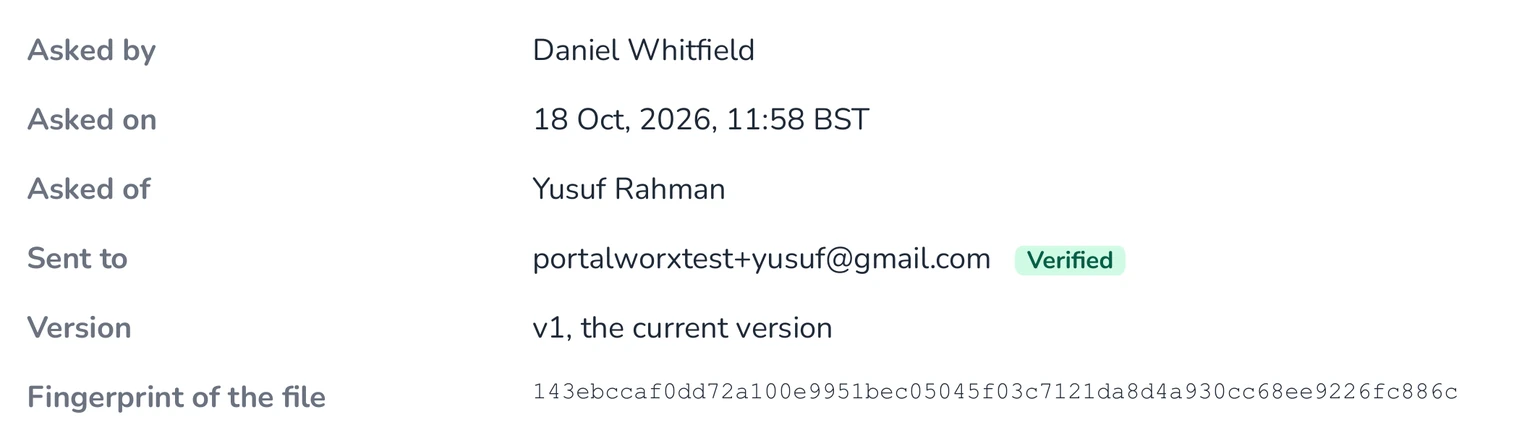
This request asked for it, so before they could sign we emailed them a one-time code and they typed it in. That's written on the record: whoever answered could read that mailbox at that moment. It proves control of the inbox, not identity.
The SHA-256 of the exact file they saw, 64 characters that change if a single byte of the file changes. The file itself is embedded inside the record PDF, so the fingerprint can be checked against it by anyone, at any time, without us.
The version they signed, v1 here, and whether it's still the current one. When version C replaces version B, this record still says B, adds "since replaced by C", and carries B's own file inside it. The argument about which drawing was approved is over before it starts.
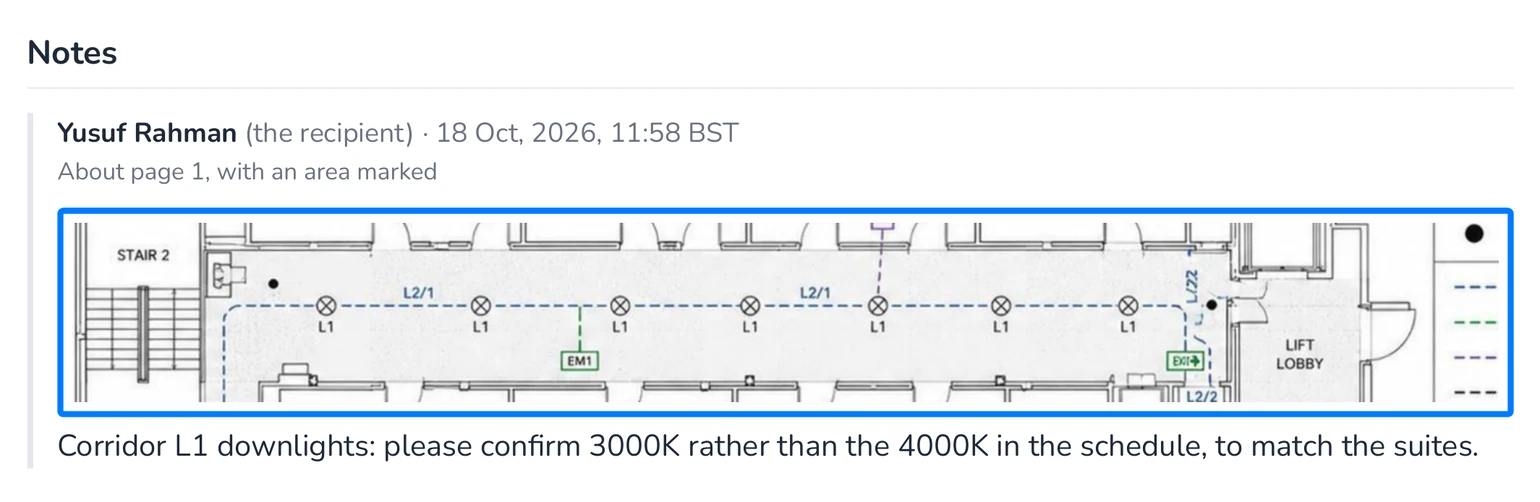
The client marked an area of page one and wrote a note against it. The record doesn't just quote the note: it embeds a crop of that exact spot on the page, at print resolution, beside their words. Eighteen months later nobody has to find the drawing to know which spot they meant.
A signing tool would email you this and be done. Here the record sits on the document it's about, at the version it's about, next to the photos and the thread, findable when the invoice is disputed. That's the difference between a signature and proof of sign-off.
The PDF below is the record itself, original file embedded, exactly as the signer could have downloaded it. Open it, check the fingerprint against the attached file, hand it to whoever you like.
Download the sample record (PDF)Free for 14 days, no card. Sign-off isn't counted on any plan.

